Fresh Spirulina vs. Powder: Which is better?
Spirulina - a short definition: Spirulina belongs to the genus of cyanobacteria, but is better known as microalgae. With 60% protein, all nine essential amino acids, and high levels of iron, B vitamins, and antioxidants, it boasts an impressive nutritional profile. The WHO declared it the “best food of the future” in 1974.
With the MySpirulina Farm, you can enjoy spirulina not as a powder from a bag, but as a fresh, creamy paste straight from your windowsill. But does it really make a difference what form we consume the algae in, or is it all the same in the end? This topic is hotly debated in the food scene – and we at MySpirulina hear this question every day.
Admittedly, we are not entirely objective. After all, we love growing it at home. But that's precisely why we've set out to provide you with a completely transparent fact-check here.
In this article, we take a close look at the Spirulina difference. We compare taste, quality, origin, and price so that you can ultimately make the choice that perfectly suits your lifestyle.
Spirulina algae? What exactly is that?
Before we really dive into the Spirulina comparison, let's briefly talk about what Spirulina actually is.
Strictly speaking, Spirulina is not an algae, but a genus of cyanobacteria. In the past, it was simply called "blue-green algae" due to its blue-green color and ability to photosynthesize. However, because Spirulina grows in water just like algae and produces oxygen through photosynthesis, it is referred to as "microalgae" in commerce, the food scene, and by customers everywhere.
Don't worry: to keep things simple, we'll continue to casually refer to Spirulina as "algae" here. That way, everyone immediately knows what is meant.
Microscopic Spirulina has repeatedly made international headlines: as early as 1974, the World Health Organization (WHO) declared Spirulina the "best food of the future." Space agencies NASA and ESA have also been using the algae for their space missions since the 1980s, as it can be transported and used extremely efficiently. In 2008, the UN Food and Agriculture Organization (FAO) officially declared Spirulina a superfood.
Currently, NASA is testing the cultivation of Spirulina in space. This is no longer just about healthy nutrition. The tiny organisms are extremely efficient at photosynthesis: they filter CO₂ from the cabin air and convert it into fresh oxygen. In the future, the algae could thus contribute to safely supplying the crew with clean breathing air as a natural life support system.
Spirulina powder: How it's made
Spirulina powder is spray-dried at 100-200°C. Up to 30% of carbohydrates and 20% of proteins are lost during this process.
If you want to buy high-quality Spirulina today, you'll quickly find the dried variety. But from harvest to Spirulina in the bag, the algae has to travel a long way. We'll show you how a living algae becomes the fine, dark green powder.
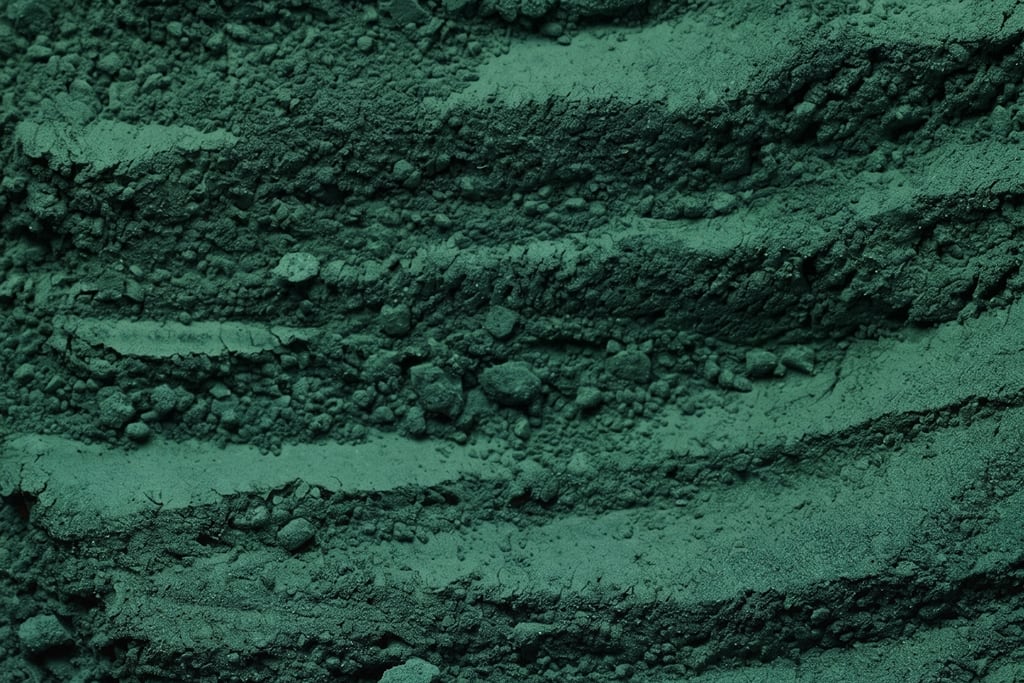
The journey from harvest to packaging
Today, the production of Spirulina powder takes place largely in huge, open aquaculture facilities in Asia. There, the algae grow in massive basins. However, some algae farms are also located in Europe.
In these open basins, paddle wheels keep the algae constantly moving so that each cell receives uniform sunlight. Once the algae density is high enough, the green water is pumped through fine sieves or spun in large centrifuges to separate the algae from the water. Only after this mechanical filtration and subsequent cleaning washes is the moist raw paste formed.
To turn the harvested spirulina paste into a shelf-stable powder, many large producers rely on spray drying. In this drying process, the liquid algae paste is processed under high pressure with hot air at temperatures of 100-200 °C.
Spirulina nutrients: What happens during drying?
The strong heat exposure during spray drying alters the biology of the algae. The delicate cell membrane is broken open. While this makes the powder extremely shelf-stable, it leads to the inactivation of certain ingredients and heat-sensitive enzymes. Additionally, the algae comes into extensive contact with oxygen due to the cell breakage, which leads to rapid oxidation.
Laboratory analyses comparing different drying methods show that hot air drying destroys up to 30% of valuable carbohydrates and 10% to 20% of proteins. Accordingly, the outer walls of the spirulina cell filaments break at a drying temperature of 60 °C.
Especially heat-sensitive vitamins and the plant pigment phycocyanin suffer greatly from the extreme temperatures. In the end, a shelf-stable nutrient concentrate remains, but the original, vibrant vitality of the fresh primal algae is lost in this industrial process.
Fresh Spirulina: How it's grown at home
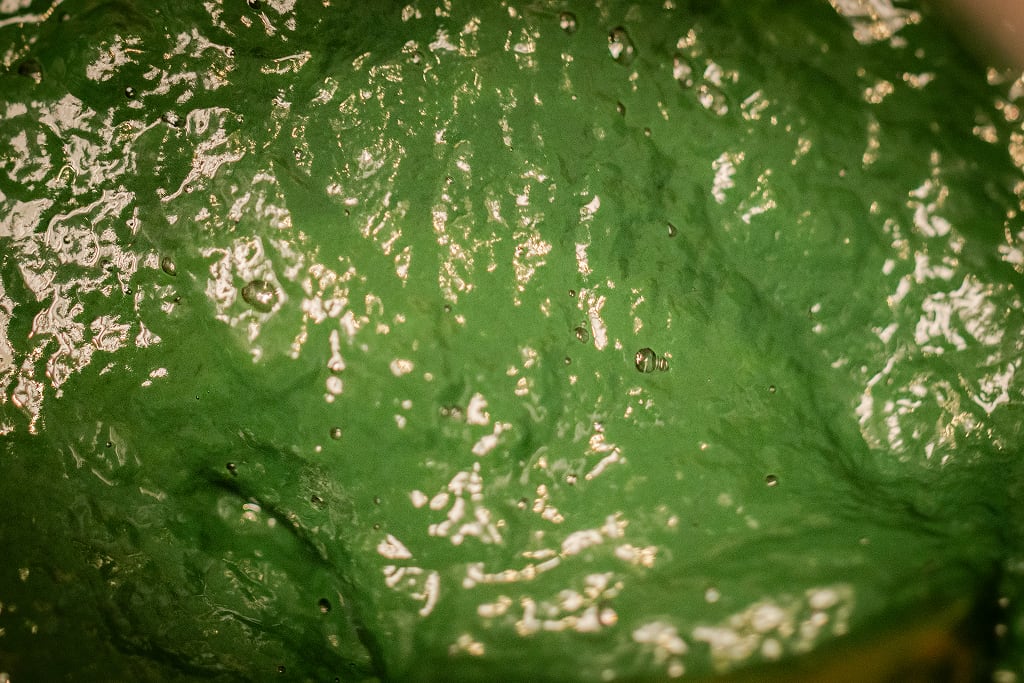
The opposite of imported dried powder is living, fresh Spirulina. Since fresh algae are extremely sensitive and spoil quickly without refrigeration, they cannot simply be stored on supermarket shelves. The logical solution: cultivating Spirulina in your own home.
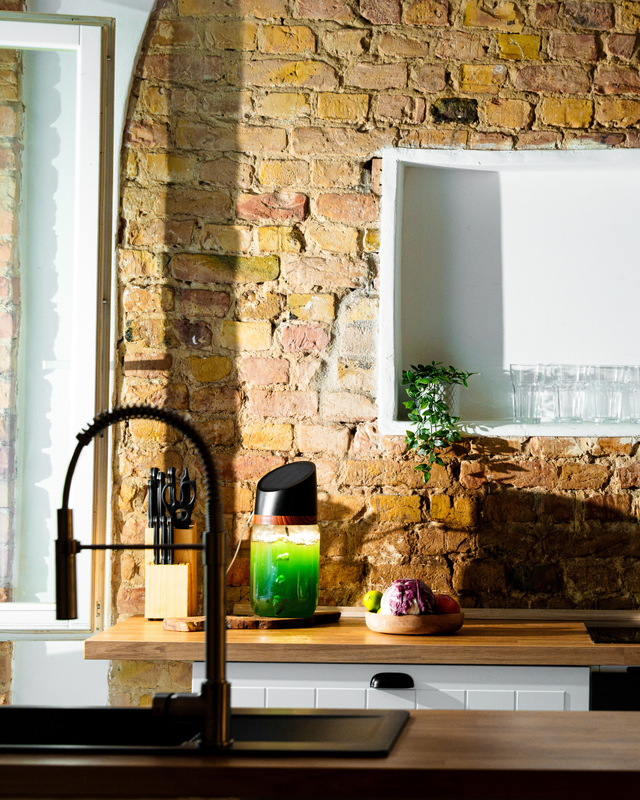
With the modern MySpirulina Farm, cultivation takes place via a smart system: you set up a culture with special nutrient salt and a starter culture. A small tube supplies oxygen and keeps the algae in motion, while the farm is constantly supplied with the necessary energy via a USB-C cable.
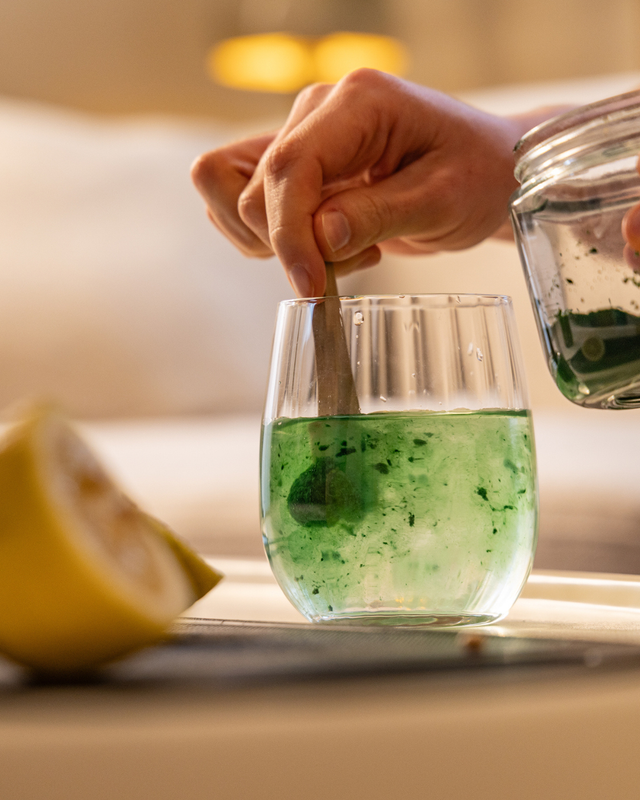
After about 10 to 14 days, the harvest is ready. You simply pour the dark green liquid through a filter sieve. What remains is a fine, creamy paste. This living algae mass is not heated, not dried, and not pulverized. You harvest it and can consume it directly seconds later.
Would you like to know more about how fresh Spirulina is grown? Find out here how you can easily grow this green powerhouse at home.
Click here for the instructions: Grow Spirulina yourself.
Fresh Spirulina vs. Powder: A direct comparison
Fresh spirulina retains all nutrients, tastes mild, and incurs no drying losses. Powder has a longer shelf life and is travel-friendly, but loses enzymes, phycocyanin, and heat-sensitive vitamins.
Here are the key differences summarized at a glance.
| Spirulina Powder | Fresh Spirulina | |
|---|---|---|
| Quality and Enjoyment | ||
| Taste | Intense, fishy, earthy | Creamy, mild, neutral |
| Consistency | Powdery, often clumps | Creamy paste |
| Freshness | Months old | Directly after harvest |
| Processing | Spray-dried (>100°C) | Raw, live, unprocessed |
| Heavy Metal Risk | Possible with cheap products | Controlled cycle |
| Origin & Sustainability | ||
| Origin | Mostly Asia | Own kitchen, 100% transparent |
| Transport Route | 10,000+ kilometers | Minimal transport route |
| Packaging | Plastic/Aluminum | Reusable glass |
| CO₂ Footprint | High (transport & drying) | Minimal |
| Everyday & Costs | ||
| Application | Versatile (even on the go) | Smoothies, bowls, breakfast, sweet & savory |
| Price per Day (over 12 months) | approx. €0.04 – €0.16 | approx. €0.63 |
Taste – This is the biggest difference
When deciding between spirulina powder and fresh spirulina, taste naturally plays a major role. While the dried powder is often described as quite fishy and earthy, the fresh variety tastes pleasantly mild and neutral.
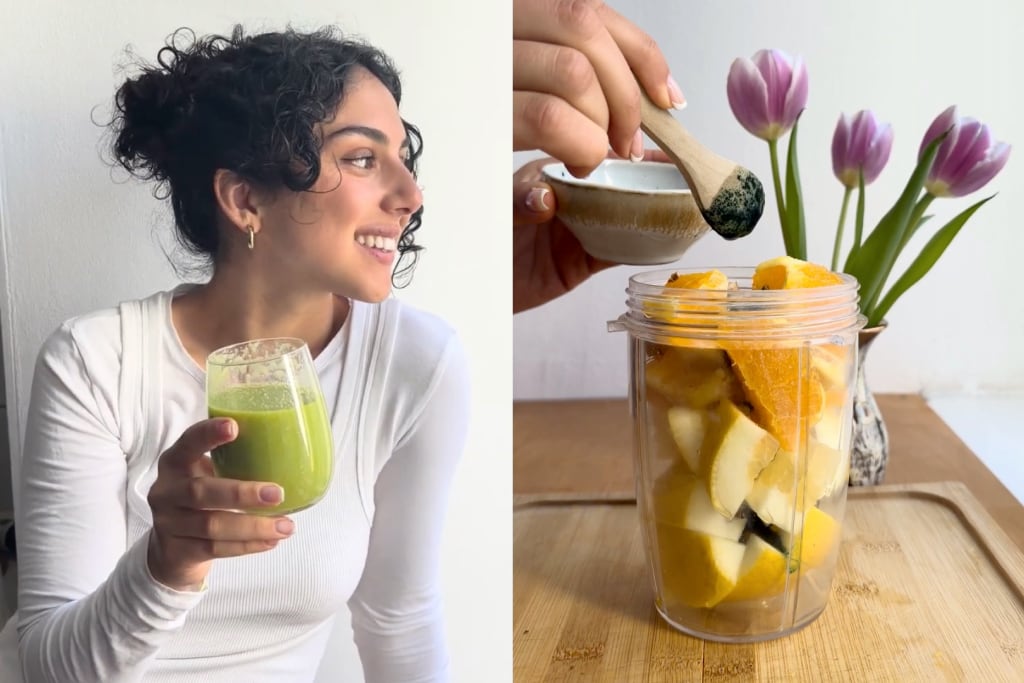
But why is that? This intense algal taste only develops after harvesting during the production of the powder. Industrial drying breaks down the cell membrane, causing fatty acids to oxidize extremely quickly. This then creates the typical aroma, which is often perceived as unpleasant.
With fresh spirulina, however, the cells remain completely intact and alive. The creamy paste is almost tasteless and has only a very slight nutty note. So you can easily stir it into smoothies or yogurt without overpowering their natural flavor.
Spirulina Quality & Purity Check
An often underestimated factor in spirulina quality is the purity of the product. The Federal Office of Consumer Protection and Food Safety (BVL) found in comprehensive studies in 2024 that dried algae products can be contaminated with heavy metals such as cadmium, lead, or copper.
In addition, the consumer association warns against contamination with polycyclic aromatic hydrocarbons (PAHs), which usually arise from deficiencies in the manufacturing process or errors in the drying process. Although there are now maximum levels for PAHs in the EU, the safest way remains home cultivation.
If you cultivate your algae at home in the MySpirulina Farm, you have full control over the water and the nutrient salt used. The risk of external contamination is significantly reduced in this closed system.
Sustainability & ecological footprint
Spirulina needs 10x less water than plants and 100x less than livestock farming. Imported powder burdens the balance due to transport and packaging; home cultivation reduces both to a minimum.
Spirulina algae is one of the most resource-efficient foods available. According to data from the French Spirulina Federation (FSF), the microalgae requires ten times less water than conventional crops and even one hundred times less water than livestock farming.
The catch? A large portion of spirulina comes from Asia. This means import over thousands of kilometers by container ship or airplane. This severely impacts the ecological balance.
Added to this is the high energy consumption for drying plants and the resulting packaging waste made of plastic or aluminum.
When cultivating in your own kitchen, the transport route for your harvest shrinks to a minimum. Apart from shipping the farm and accessories, there are no global supply chains involved. It's almost impossible to enjoy a superfood more sustainably and locally.
Important number: Spirulina requires 10x less water than conventional crops and 100x less than livestock farming.
Spirulina Price Check: Cheap Powder or Long-Term Investment?
Looking purely at the cent amount per day, imported powder clearly wins at first glance. A 500g bag of spirulina powder typically costs between 10 and 15 euros. With a recommended daily dose of 1.5 to 6 grams, you pay only about 4 to 16 cents per day at a price of €13. That's extremely cheap, but it's the price for imported mass-produced goods from abroad.
With fresh spirulina, the calculation looks different. The MySpirulina Starter Kit costs a one-time fee of 149.95 Euros. The crucial difference, however, is that this is a long-term investment.
From the second year, the costs for fresh spirulina from the MySpirulina farm drop to approx. €0.22 per day.
If you amortize the one-time purchase of the farm, including the necessary nutrient salts, over time, the price quickly becomes relative: In the first year, the price is approximately €0.63 per day. From the second year, when the starter kit has long been paid off, the running costs for your fresh harvest drop to just about €0.22 per day. The longer you use your farm, the cheaper your superfood becomes.
Compared to ready-made fresh spirulina from the store, your own farm quickly pays off. At the provider Algenwerk, 170 grams of fresh spirulina cost, for example, 15.90 Euros. With a recommended daily dose of 7.5 to 30 grams of the paste, you would pay between 0.70 Euros and 2.81 Euros per day.
Who benefits from what?
An important note: Spirulina is a great product, but not a magic bullet that replaces a balanced diet. The consumer protection agency rightly points out that many advertising claims are not scientifically sound.
Another important fact for vegans: The vitamin B12 contained in spirulina is largely present as so-called "pseudo-vitamin B12." Unfortunately, the human body cannot actively utilize this specific form.
So, spirulina is not suitable as a sole B12 substitute, but it is a great source of plant-based protein, essential amino acids, iron, and the natural plant pigments phycocyanin and chlorophyll. While phycocyanin contains antioxidants and has anti-inflammatory effects, chlorophyll supports nutrient supply in the body.
When is powder the better choice? If you travel a lot, constantly stay in hotels for work, and want to transport your superfood easily in your suitcase, the dried powder has clear advantages due to its long shelf life without refrigeration.
When is it worthwhile to grow spirulina yourself? If you want to enjoy your superfood fresh, unprocessed, and perfectly fresh, there's no way around your own farm. Fresh spirulina contains its nutrients in their natural structure, completely without the heat-related processing losses of industrial drying.
Conclusion: Who wins the duel?
The result in the big comparison of fresh spirulina vs. powder is clear: both have their strengths. Those looking for maximum flexibility on the go will choose the shelf-stable powder. However, if you value true freshness, a mild taste, and maximum sustainability without the risk of pollutants, your own home harvest is clearly superior.
Getting started with your own algae cultivation is simpler than most people think. On our website my-spirulina.de, we show you how to become your own nutrient producer without any prior knowledge.
Frequently Asked Questions (FAQ)
What is the exact difference between fresh spirulina and powder? The main difference lies in the degree of processing. While spirulina powder is spray-dried industrially at over 100°C, the fresh variety remains raw, moist, and biologically alive. This makes it taste completely different and retains its nutrients in their natural cell structure.
Does fresh spirulina really taste different from powder? Yes, the difference is enormous. The typical fishy and earthy aroma of powder only develops through oxidation after the cells break during drying. Freshly harvested spirulina is completely odorless, tastes pleasantly mild and neutral, and has a creamy consistency.
How long does the fresh algae paste last? After harvesting, you can easily store the fresh paste in the refrigerator for about 7 to 8 days. If the mass changes color significantly or starts to smell unpleasant, it should no longer be consumed.
What happens to my MySpirulina Farm when I'm on vacation? Don't worry, your algae are extremely low-maintenance. If you're away for a few days, the farm will simply continue on its own thanks to the smart system and automatically switch to a saturation phase. Your spirulina will only slowly begin to die after about three months.
Where does commercially available spirulina powder come from? Industrial algae cultivation is heavily concentrated in large facilities in Asia, particularly in China. From there, the products travel enormous distances before arriving pre-packaged on our shelves.
How much fresh spirulina is equivalent to one teaspoon of powder? Fresh spirulina paste consists largely of water. Therefore, in terms of nutrient content, a 15-gram portion of fresh paste is roughly equivalent to 3 grams of dried powder.
Ready for your daily fresh nutrient boost? Discover the MySpirulina Starter Kit now and start your own algae cultivation right on your windowsill!
------
Sources and further references
To provide you with the promised, absolutely transparent fact check, here you will find all scientific studies, official reports, and official consumer protection notices used in the text:
1. Scientific studies on nutrients & drying processes
- Influence of drying processes on algal biology: Desmorieux, H. et al. – Biochemical and physical criteria of Spirulina after different drying processes. To the research report on ResearchGate
- Summary of the real value of the microalga: The True Value of Spirulina. To the publication on ResearchGate
- Changes in proteins and ingredients in food due to drying: Innovative Food Science & Emerging Technologies. To the study abstract on ScienceDirect
- Textbook on algal biomass and bioactive components: Microalgae Biology and Biotechnology. To the book chapter on SpringerLink
- Current research results on microalgae cultivation: Journal of Applied Phycology. To the specialist article on SpringerLink
2. Consumer protection, purity & pollutant risks
- Studies on heavy metals in algae products (2024): Federal Office of Consumer Protection and Food Safety (BVL) – Elements and Iodine in Algae Products. To the BVL press release
- Comprehensive market check on algae products (February 2025): Consumer Centre – Report on the Algae Market Check. To the official report (PDF)
- Assessment of Spirulina food supplements (Vitamin B12 & advertising claims): Consumer Centre – Spirulina: Lots of green and little substance? To the overview article of the Consumer Centre
- Warnings about contaminants in natural food supplements: Consumer Centre – Environmental toxins in natural food supplements. To the Consumer Centre's warning notice
- Background information on polycyclic aromatic hydrocarbons (PAHs): Federal Office of Consumer Protection and Food Safety (BVL) – FAQ on PAHs in Food. To the BVL FAQs
- Laboratory results of state investigation offices on algae preparations: Investigation Offices for Food Monitoring Baden-Württemberg (UA-BW) – Food supplements from algae biomass. To the UA-BW investigation report
3. Sustainability, cultivation & space research
- Spirulina research on the International Space Station (ISS): National Aeronautics and Space Administration (NASA) – Nutrition Research Arrives Aboard Space Station. To the NASA mission report
- Resource efficiency and ecological data in algae cultivation: Fédération des Spiruliniers de France (FSF) – Culture et Environnement de la Spiruline. To the FSF environmental factors
Insight into the functioning of modern algae farms: Federal Agency for Agriculture and Food – Microalgae: How algae farms produce superfood.To the practical article on Oekolandbau.de